Seeing “W2 only” or “W2 candidates” in a job post can feel confusing, especially when you’re already trying to understand pay rate, contract length, taxes, and recruiter terms at the same time. If you searched for W2 Candidates Meaning, you probably just want a clear answer without complicated tax language or staffing jargon.
In simple words, W2 candidates are job applicants who can be hired as employees through a company or staffing agency payroll and receive Form W-2 for tax reporting. This usually means the employer will not accept 1099 contractors, C2C vendors, or third-party agency arrangements for that role. This guide will explain how W2 jobs work, how they compare with 1099 and C2C roles, and what you should ask a recruiter before accepting an offer.
W2 Candidates Meaning: Job, Tax, Contract, and Full-Time Explained
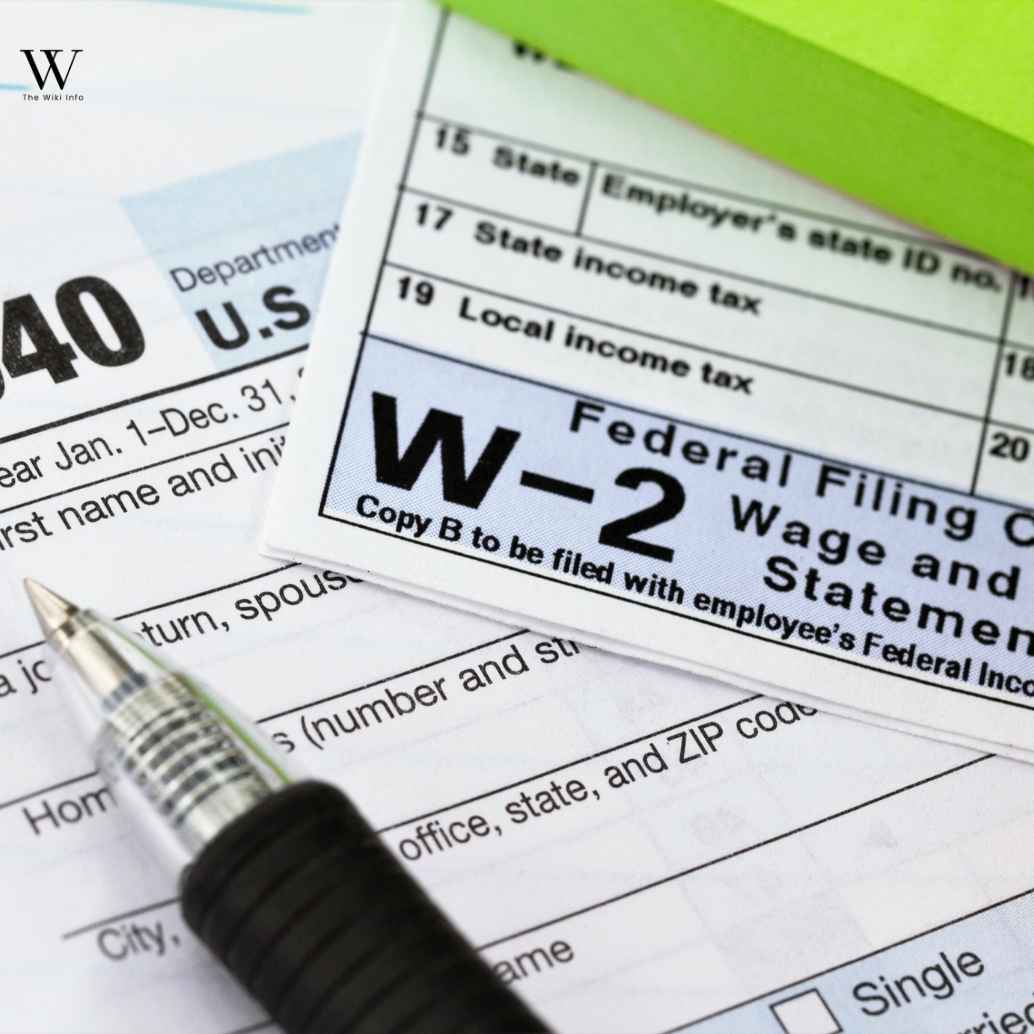
W2 candidates meaning refers to job applicants who can be hired as employees through a company or staffing agency payroll and receive Form W-2 for tax reporting. In job posts, “W2 only” usually means the employer does not accept 1099 contractors, C2C vendors, or third-party agency arrangements.
If you see this term in a recruiter message, job board, or staffing email, it is mainly about how you will be paid, taxed, and classified. It does not automatically mean the job is permanent, full-time, or better than every other setup. You still need to check the payroll company, benefits, contract length, tax form, and employment terms before you say yes.
W2 Candidates Meaning in Simple Words
W2 Candidates Meaning is simple: the employer or staffing agency wants someone who can work as a W-2 employee instead of a 1099 independent contractor or C2C vendor. In this setup, the worker is usually placed on payroll, receives regular wages, and gets a Form W-2 at the end of the year for tax filing.
The most important thing to remember is that W2 describes the employment and tax setup, not always the job schedule. A W2 candidate may be hired full-time, part-time, temporary, seasonal, contract-based, or contract-to-hire depending on the company’s offer and paperwork.
W2 Meaning in Job Posts
When a job post says W2, it usually means the company wants to pay you through payroll as an employee. That often includes tax withholding from your paycheck, employer payroll reporting, and a year-end W-2 form that shows your wages and taxes withheld.
This wording is common in US staffing, IT hiring, healthcare roles, admin jobs, warehouse jobs, and contract positions. The IRS looks at the actual working relationship, including behavioral control, financial control, and relationship factors, when deciding whether someone is an employee or independent contractor. (IRS)
W2 candidate
A W2 candidate is a person who is eligible and willing to work through a W-2 payroll setup. In staffing, this can mean the candidate will be employed by the staffing agency while doing work for the client company.
W2 employee
A W2 employee is someone whose employer withholds taxes from their wages and reports those wages on Form W-2. Under common-law rules, the IRS says a worker is generally an employee when the business has the right to control what work is done and how it is done. (IRS)
W2 contractor
A W2 contractor is usually a temporary or project-based worker who is still paid through payroll as an employee. In many staffing setups, the staffing agency is the employer, while the worker performs the job for a client company.
W2 only
W2 only means the employer does not want to hire through 1099, C2C, or outside vendor arrangements for that role. It is a payroll restriction, so you should ask who will employ you, who will pay you, and what benefits or protections apply.
For readers comparing job-post wording in different fields, our Tvs Company Staff Nurse Vacancy guide shows how employment terms can appear in vacancy-style listings.
W2 Candidate vs W2 Employee
A W2 candidate is someone being considered for a W-2 role, while a W2 employee is someone already hired under that setup. Before hiring, you are only a candidate. After onboarding, payroll setup, tax forms, and employment paperwork, you become the employee or worker under the agreed arrangement.
This difference matters because recruiters sometimes use the phrase loosely. A job may say W2 candidate, W2 role, W2 contract, or W2 only, but you still need to confirm the exact employment relationship. Ask whether you will be on the company payroll, staffing agency payroll, or another employer-of-record arrangement.
W2 Employee vs 1099 Contractor

A W2 employee usually works under more employer direction, receives wages through payroll, and has taxes withheld from each paycheck. A 1099 contractor is generally self-employed, invoices for work, manages their own taxes, and has more control over how the work is completed. The IRS says classification depends on the full relationship and the degree of control and independence. (IRS)
The difference affects taxes, benefits, legal protections, and daily work expectations. The Department of Labor explains that employees may receive FLSA protections, while independent contractors are considered to be in business for themselves and are not covered by the FLSA in the same way. (DOL)
| Factor | W2 Employee | 1099 Contractor |
| Tax form | Form W-2 | Usually Form 1099-NEC or other 1099 form |
| Taxes | Employer withholds payroll taxes | Contractor usually handles self-employment taxes |
| Payroll | Paid through company or agency payroll | Paid through invoices or contract payments |
| Work control | Employer often controls schedule, tools, and process | Contractor usually controls how work is done |
| Benefits | May qualify depending on employer policy and eligibility | Usually handles own benefits |
| Legal protections | May receive employee protections | Fewer employee-style protections |
| Common use | Regular jobs, staffing roles, long-term roles | Projects, freelance work, business services |
W2 vs C2C Meaning for Job Applicants
W2 vs C2C is one of the biggest points of confusion in job posts. W2 means you are paid as an employee through payroll, while C2C means a company contracts with another business entity, such as an LLC or corporation, instead of hiring the individual directly.
For applicants, the practical difference is simple: W2 is person-to-employer payroll, while C2C is business-to-business contracting. Many recruiters write “W2 only” because the client does not want to deal with vendor companies, third-party agencies, or Corp-to-Corp paperwork.
W2 only no C2C
W2 only no C2C means the employer wants an individual worker on payroll, not a worker submitted through their own company or another vendor. This is common when the client wants more direct payroll control and fewer third-party compliance issues.
C2C not accepted
C2C not accepted means the company will not sign a contract with your LLC, corporation, or outside agency for that role. You may still be qualified for the job, but you would need to work through the W2 setup they allow.
Third-party vendor restrictions
Third-party vendor restrictions mean the employer does not want resumes, billing, or contracts handled through outside companies. Before applying, ask the recruiter whether the role accepts direct W2 candidates only or whether staffing-agency W2 is also allowed.
To understand the business-to-business side more clearly, read our c2c Position Meaning guide before comparing W2 and C2C job offers.
W2 Contract vs Full-Time Job
A W2 contract job means you are paid through payroll as a W-2 worker, but the role may be temporary, project-based, or tied to a staffing agency. A full-time W2 job usually means you work directly for an employer on a longer-term schedule with more stable employment expectations.
The important part is that W2 does not automatically mean full-time. A W2 role can be full-time, part-time, temporary, seasonal, contract, or contract-to-hire depending on the offer, payroll setup, and company policy.
| Factor | W2 Contract | Full-Time W2 |
| Job length | Usually temporary or project-based | Usually ongoing |
| Payroll | Company, staffing agency, or employer of record | Direct employer payroll |
| Benefits | May be limited or based on eligibility | Often more available, depending on employer |
| Job security | Lower because the role may end after a project | Usually more stable |
| Schedule | Can be full-time or part-time | Usually full-time hours |
| Best for | Short-term work, staffing roles, contract-to-hire | Long-term career stability |
W2 Contractor Meaning and How It Works
A W2 contractor is usually someone hired for a limited assignment but paid as an employee through payroll. In staffing, the agency may be your legal employer, while the client company gives you daily work, project tasks, or workplace instructions.
This setup can feel confusing because you may work at one company but receive your paycheck and tax form from another. Before accepting, ask who your employer is, who handles payroll, whether benefits apply, and what happens when the contract ends.
Taxes Connected With W2 Candidate Status

Taxes are one of the biggest reasons employers use W2 language in job posts. When you work as a W-2 employee, your employer usually withholds taxes from your paycheck and reports your annual wages on Form W-2.
For W2 Candidates Meaning, the tax side matters because it tells you how your income will be reported. Instead of invoicing like a contractor, you usually receive wages through payroll, along with a pay stub showing deductions and withholding.
Federal income tax withholding
Federal income tax withholding means your employer takes estimated federal tax from your paycheck and sends it to the government. You usually complete Form W-4 during onboarding so the employer knows how much to withhold.
Social Security and Medicare
Social Security and Medicare taxes are payroll taxes connected with employee wages. In a normal W2 setup, these are withheld from your pay, and the employer also has payroll tax responsibilities.
State and local taxes
State and local taxes depend on where you work and live. Some workers may see state or local tax withholding on their paycheck, while others may not, depending on the state and local rules.
Year-end Form W-2
Form W-2 is the year-end wage and tax statement you use when filing your tax return. It shows your wages and the taxes withheld from your pay during the year.
W2 Employee vs Contractor Tax Responsibilities
A W2 employee has taxes withheld by the employer, so tax handling is usually more straightforward. You still need to file your tax return, but your paycheck already includes deductions for federal income tax, Social Security, Medicare, and possibly state or local taxes.
A contractor usually has more responsibility because taxes may not be withheld from payments. Independent contractors may need to track income, manage expenses, make estimated tax payments, and handle self-employment tax depending on their situation.
| Tax Area | W2 Employee | Independent Contractor |
| Tax withholding | Employer withholds taxes | Worker usually handles taxes |
| Tax form | Form W-2 | Usually 1099 form |
| Payment style | Paycheck or direct deposit | Invoice or contract payment |
| Payroll taxes | Shared through payroll setup | Usually handled by contractor |
| Expenses | Fewer work expense deductions | May track business expenses |
| Tax complexity | Usually simpler | Usually more complex |
If you are planning to handle more than one payroll role, our Can You Work Two w2 Jobs guide explains what to check before managing multiple W2 jobs.
W2 Job Examples for Better Understanding
W2 jobs appear in many industries, not just office roles. You may see W2 hiring in technology, healthcare, customer support, retail, administration, warehouse work, recruiting, sales, and temporary staffing.
The job title alone does not prove whether the role is W2, 1099, or C2C. Always check the offer letter, recruiter message, payroll setup, and tax form details before assuming how the job is classified.
Examples of W2 jobs can include
- IT developer hired through a staffing agency
- Nurse working through hospital payroll
- Administrative assistant in an office
- Customer support representative
- Warehouse associate
- Business analyst on a W2 contract
- Recruiter working for a staffing firm
- Sales representative paid through payroll
- Retail associate with scheduled shifts
- Temporary worker placed by an agency
For another job-search style guide, you can explore sask gov jobs to see how employment details are usually explained for applicants.
W2 Only No C2C Meaning in Recruiter Messages
When a recruiter says “W2 only no C2C,” they mean the role is open only to workers who can be paid through a W-2 payroll setup. The company does not want to work with your LLC, corporation, outside agency, or third-party vendor for that position.
This phrase is common in staffing and IT jobs because clients often set strict payroll and compliance rules. For W2 Candidates Meaning, this is one of the most important lines to understand before you apply, because it tells you what hiring arrangement is allowed.
| Recruiter Phrase | Simple Meaning | What You Should Ask |
| W2 only | Payroll employee setup only | Who will be my employer? |
| No C2C | No Corp-to-Corp vendor contract | Can I apply directly as W2? |
| No third-party vendors | Outside agencies are not accepted | Is staffing-agency W2 allowed? |
| Direct W2 only | The company wants direct payroll hiring | Will I be on company payroll? |
| W2 contract | Temporary or project role through payroll | What is the contract length? |
If staffing terms feel confusing, our lindsay usa staffing guide can help you understand how recruitment and hiring language appears in job-related searches.
Reddit Confusion Around W2 Job Terms

Online discussions about W2 jobs often become confusing because people use the same words in different ways. Some say W2 means full-time, some use it for contract jobs, and others use it only to compare W2 with 1099 or C2C.
The clean way to understand it is this: W2 tells you how the worker is classified and paid, not the full story of the job. A W2 role can still be temporary, remote, part-time, contract-to-hire, or agency-based, so always confirm the offer details before making a decision.
| Confusing Term | Clear Explanation |
| W2 means full-time | Not always. W2 can be full-time, part-time, temporary, or contract. |
| W2 contractor | A contract worker paid through payroll, often by a staffing agency. |
| W2 employee | A worker whose wages are reported on Form W-2. |
| W2 only | The employer does not want 1099 or C2C arrangements. |
| W2 candidates meaning taxes | Taxes are usually withheld from payroll wages. |
How to Know the Difference Between W2, 1099, and C2C
The easiest way to tell the difference is to look at who pays you, who controls the work, and which tax form you receive. A W2 worker is usually paid through payroll, a 1099 contractor usually invoices as self-employed, and a C2C worker usually works through a business entity.
Do not rely only on the job title. The IRS says worker classification depends on the facts of the relationship, including behavioral control, financial control, and the type of relationship between the parties. The IRS also allows Form SS-8 to request a worker-status determination when classification is unclear. (IRS)
Simple checklist before accepting the role
- Check whether the job post says W2, 1099, C2C, or contract-to-hire.
- Ask who will be your legal employer.
- Confirm whether taxes will be withheld from your paycheck.
- Ask which tax form you will receive at year-end.
- Review who controls your schedule, tools, and work process.
- Confirm whether benefits, overtime, or paid leave apply.
- Read the offer letter or contract before starting work.
For official guidance, always check the IRS worker classification rules because employee or contractor status depends on the real working relationship, not just the job title.
Benefits Commonly Linked With W2 Jobs
W2 jobs may come with benefits and worker protections, but they are not guaranteed for every role. Eligibility can depend on employer policy, hours worked, location, job classification, waiting periods, and whether the role is direct-hire or agency-based.
This is why you should never assume benefits from the word W2 alone. Ask the recruiter or employer for the benefits summary, payroll terms, overtime status, and contract length before accepting the offer.
Health insurance
Some W2 employees may qualify for employer-sponsored health insurance, but eligibility often depends on employer size, work hours, and plan rules. Ask when coverage starts, what plan options exist, and whether the role qualifies.
Paid time off
Paid time off can include vacation, sick leave, holidays, or personal time, but the rules vary by employer and location. A W2 contract worker may receive different PTO terms than a full-time direct employee.
Workers’ compensation
Workers’ compensation is commonly connected with employee status and can help cover work-related injury situations. Ask whether coverage is handled by the employer, staffing agency, or payroll provider.
Unemployment insurance
W2 employees may have access to unemployment insurance when eligible, but exact rules can vary by state and situation. Independent contractors generally do not receive the same employee-style unemployment protection.
Employer payroll support
A major W2 advantage is payroll support. Your employer usually handles wage reporting, withholding, pay stubs, and year-end Form W-2 paperwork instead of making you manage everything like a self-employed contractor.
Legal and Payroll Obligations for Employers
When an employer hires W2 employees, payroll duties usually include withholding federal income tax, Social Security, and Medicare taxes, then reporting wages properly. The IRS says employers who withhold federal income tax, Social Security, or Medicare taxes generally must file Form 941 each quarter, and employers use Form W-2 to report employee wages and withheld taxes. (IRS)
Employers also need to prepare W-2 forms correctly and on time. The IRS states that employers must furnish Form W-2 to employees and file W-2 information with the Social Security Administration by January 31. Rules can vary by situation, so workers should verify details through official IRS guidance, employer documents, or a qualified tax professional. (IRS)
If your job search also involves work eligibility or sponsorship details, our Four Seasons Health Care Visa Sponsorship guide can help you understand why official hiring terms matter.
Misclassification and Why It Matters

Misclassification happens when a worker is treated as one type of worker on paper, but the real working relationship fits another category. For example, a person may be labeled as a 1099 contractor even though the company controls their schedule, tools, duties, and daily work like an employee. The IRS says worker status depends on the relationship, including behavioral control, financial control, and the relationship of the parties. (IRS)
For W2 Candidates Meaning, this matters because the label in a job post is not enough by itself. A role can say W2, 1099, C2C, contractor, consultant, or temporary, but the actual facts still matter. The Department of Labor explains that employees receive FLSA protections, while independent contractors are generally in business for themselves and are not covered in the same way. (DOL)
| Misclassification Issue | Why It Matters |
| Wrong worker label | Taxes, payroll, and benefits may be handled incorrectly |
| No tax withholding | The worker may face unexpected tax responsibility |
| No employee protections | Minimum wage, overtime, or other protections may be affected |
| Wrong contract terms | The offer may not match the real work setup |
| Employer control confusion | High control may point toward employee status |
Red Flags in W2 Job Offers
A W2 job offer should clearly explain who is hiring you, who is paying you, what tax form you will receive, and whether the role is temporary or full-time. If the recruiter avoids basic payroll questions or gives confusing answers, slow down before sharing personal documents or accepting the role.
One red flag does not always mean the job is fake or unsafe, but it does mean you should verify the details. The IRS notes that if an employee is wrongly classified as an independent contractor without reasonable basis, employment tax liability may apply, so both workers and employers should take classification seriously. (IRS)
| Red Flag | What It May Mean | What to Ask Before Accepting |
| “W2” is mentioned, but no payroll company is named | The hiring setup may be unclear | Who will issue my paycheck and Form W-2? |
| Recruiter says W2 but asks you to invoice | It may not be a real W2 payroll role | Will taxes be withheld from my paycheck? |
| No offer letter or contract | Terms may not be documented | Can I review the written offer first? |
| Benefits are promised vaguely | Eligibility may be limited | Can you send the benefits summary? |
| Pay rate changes after discussion | The role may have hidden terms | Is this hourly, salary, contract, or contract-to-hire? |
| You are asked for sensitive data too early | Possible privacy or scam risk | Can I verify the company and hiring process first? |
Best Questions to Ask a Recruiter About W2 Status
Before accepting a W2 role, ask direct questions in writing. This protects you from confusion later and helps you understand whether the job is direct-hire, staffing-agency W2, contract W2, or contract-to-hire.
These questions are especially useful when a job post says “W2 only,” “no C2C,” “W2 contract,” or “direct W2.” They help you confirm the real setup behind W2 Candidates Meaning before you agree to the role.
- Who will be my legal employer?
- Will I be paid by the client company or a staffing agency?
- Will I receive Form W-2 at the end of the year?
- Will taxes be withheld from each paycheck?
- Is this role full-time, part-time, temporary, or contract-to-hire?
- What is the expected contract length?
- Are benefits included, and when do they start?
- Is overtime available or allowed?
- Is the role exempt or nonexempt?
- Who provides equipment, software, and work tools?
- Is this role remote, hybrid, or onsite?
- Are third-party vendors or C2C arrangements allowed?
- What happens if the client ends the contract early?
- Is there a conversion option to full-time employment?
Before accepting a role with special work conditions, our Fifo Offshore Jobs guide shows why asking clear job questions matters before saying yes.
Quick Comparison Chart for W2, 1099, and C2C
The simplest way to compare W2, 1099, and C2C is to look at payment, tax handling, control, and paperwork. W2 usually means payroll employee treatment, 1099 usually means self-employed contractor treatment, and C2C usually means a business-to-business contract through a company entity.
This table is not a legal decision tool, but it gives you a practical starting point. For official classification concerns, check IRS guidance, DOL guidance, state labor rules, your offer letter, and a qualified tax or legal professional when needed. (IRS)
| Worker Type | Best For | Paid By | Tax Form | Benefits | Common Risk |
| W2 | Employees, staffing roles, contract-to-hire, long-term work | Employer, staffing agency, or payroll provider | Form W-2 | May be available based on eligibility | Assuming W2 always means full-time |
| 1099 | Freelancers, consultants, project-based workers | Client or hiring business | Usually 1099 form | Usually self-managed | Underestimating taxes and expenses |
| C2C | Incorporated contractors, vendor companies, IT consulting | Business entity or vendor company | Business tax reporting setup | Managed through the company/entity | Vendor restrictions or compliance issues |
| Direct W2 | Company employee roles | Client company | Form W-2 | Often clearer, but still depends on policy | Not checking benefit eligibility |
| Staffing W2 | Temporary or contract assignments | Staffing agency | Form W-2 | May be limited or agency-based | Confusion over who the employer is |
FAQs
What are W-2 candidates?
W-2 candidates are job applicants who can be hired as employees through a company or staffing agency payroll. Their employer usually withholds taxes from their pay and reports their yearly wages on Form W-2.
What does being a W-2 employee mean?
Being a W-2 employee means you work on an employer’s payroll, receive regular wages, and have taxes withheld from your paycheck. You may also qualify for employee benefits and workplace protections depending on the job and company policy.
What is the meaning of W-2?
W-2 refers to the tax form employers use to report an employee’s annual wages and tax withholdings. In job terms, it usually means the worker is treated as an employee instead of an independent contractor.
What is W-2 employment?
W-2 employment is a work arrangement where a company or staffing agency hires you as an employee and pays you through payroll. The employer handles tax withholding and gives you a Form W-2 at the end of the year.
What does W2 candidates mean?
W2 candidates are job applicants who can work through a W-2 payroll setup. In simple terms, the employer or staffing agency can treat them as employees for payroll and tax reporting instead of hiring them as 1099 contractors or C2C vendors.
Does W2 mean full-time?
No, W2 does not always mean full-time. A W2 role can be full-time, part-time, temporary, seasonal, contract-based, or contract-to-hire. The W2 label mainly explains payroll and tax classification, not the exact schedule.
What does W2 only no C2C mean?
W2 only no C2C means the employer wants a worker who can be paid through payroll as an individual employee. They do not want to contract with your LLC, corporation, outside agency, or third-party vendor for that role.
Is a W2 contractor an employee?
A W2 contractor is often treated as an employee for payroll purposes, especially when hired through a staffing agency. The role may still be temporary or project-based, so you should confirm who the employer is and what benefits apply.
What is the difference between W2 and 1099?
W2 usually means the employer withholds taxes from wages and issues Form W-2. A 1099 contractor is usually self-employed, handles their own taxes, and receives 1099 reporting instead of W-2 reporting. The IRS looks at control and independence when reviewing classification. (IRS)
Do W2 employees pay their own taxes?
W2 employees still pay taxes, but the employer usually withholds federal income tax, Social Security, Medicare, and sometimes state or local taxes from each paycheck. The employee still files a tax return and may owe more or receive a refund depending on the full tax situation.
Can a W2 job be remote?
Yes, a W2 job can be remote, hybrid, or onsite. Remote work does not automatically make someone a contractor. The payroll setup, employer control, tax form, and working relationship are more important than the work location.
Can someone work W2 and 1099 at the same time?
Yes, many people have a W2 job and also earn 1099 income from freelance or side work. The key is to keep records clear, understand tax responsibilities for each income type, and avoid conflicts with employer policies or contract terms.
Conclusion
Understanding W2 Candidates Meaning can save you from confusion before you apply, interview, or accept a job offer. In simple terms, it means the employer or staffing agency wants someone who can work through a W-2 payroll setup, where taxes are usually withheld and income is reported on Form W-2.
The key point is that W2 does not always mean full-time, permanent, or direct-hire. A W2 role can be contract, temporary, part-time, staffing-based, or contract-to-hire. Before saying yes, always confirm who will pay you, which tax form you’ll receive, whether benefits apply, and whether the role allows W2 only, 1099, or C2C.
You can also review the Department of Labor misclassification guidance to understand how wrong worker classification may affect wages, overtime, and employee protections.

Welcome to TheWikiInfo! I am a digital content creator and researcher dedicated to breaking down complex topics into simple, actionable guides. With a deep passion for tech innovations, gaming updates, travel schedules, and pop culture trends, I aim to provide our readers with accurate, well-structured, and easy-to-understand information to solve their everyday queries.
2 thoughts on “W2 Candidates Meaning: Essential Guide to Avoid Mistakes”